DYREKTOR i RADA NAUKOWA Instytutu Rozrodu Zwierząt i Badań Żywności PAN w Olsztynie mają zaszczyt zaprosić na publiczną obronę rozprawy doktorskiej na stopień doktora nauk rolniczych w dyscyplinie zootechnika i rybactwo:
Mgr inż. Anny Wójtowicz
pt. „Wpływ subpopulacji limfocytów pomocniczych Th1 oraz Th2 oraz ich mediatorów na procesy związane z rozwojem włóknienia w przebiegu endometrosis u klaczy”.
Obrona odbędzie się w dniu 10 marca 2025 r. o godz. 1100 w trybie stacjonarnym.
Promotor:
Dr hab. Anna Szóstek-Mioduchowska – Instytut Rozrodu Zwierząt i Badań Żywności PAN w Olsztynie,
Recenzenci:
Dr hab. Małgorzata Andrea Domino – Szkoła Główna Gospodarstwa Wiejskiego w Warszawie,
Dr hab. Paweł Brym – Uniwersytet Warmińsko-Mazurski w Olsztynie,
Dr hab. Paweł Antoni Kołodziejski – Uniwersytet Przyrodniczy w Poznaniu.
Z pracą doktorską i recenzjami pracy doktorskiej można zapoznać się na stronie BIP Instytutu. Praca doktorska jest również dostępna w sekretariacie IRZiBŻ PAN w Olsztynie, przy ul. Trylińskiego 18.
Przewodnicząca Rady Naukowej Prof. dr hab. Urszula Gawlik
DYREKTOR i RADA NAUKOWA Instytutu Rozrodu Zwierząt i Badań Żywności PAN w Olsztynie mają zaszczyt zaprosić na publiczną obronę rozprawy doktorskiej na stopień doktora nauk rolniczych w dyscyplinie zootechnika i rybactwo:
Mgr Natalii Kodzik
pt. „Proteom układu rozrodczego jesiotra syberyjskiego (Acipenser baerii): charakterystyka profili białkowych plemników, plazmy nasienia, ikry i płynu owaryjnego oraz zmian w wyniku kriokonserwacji nasienia”.
Obrona odbędzie się w dniu 13 marca 2025 r. o godz. 900 w trybie stacjonarnym.
Promotor:
Prof. dr hab. Mariola Dietrich – Instytut Rozrodu Zwierząt i Badań Żywności PAN w Olsztynie,
Recenzenci:
Prof. dr hab. Mirosława Sokołowska-Mikołajczyk – Uniwersytet Rolniczy im. Hugona Kołłątaja w Krakowie,
Dr hab. Agnieszka Partyka – Uniwersytet Przyrodniczy we Wrocławiu,
Prof. dr hab. Dorota Fopp-Bayat – Uniwersytet Warmińsko-Mazurski w Olsztynie.
Z pracą doktorską i recenzjami pracy doktorskiej można zapoznać się na stronie BIP Instytutu. Praca doktorska jest również dostępna w sekretariacie IRZiBŻ PAN w Olsztynie, przy ul. Trylińskiego 18.
Przewodnicząca Rady Naukowej Prof. dr hab. Urszula Gawlik
Our Institute has joined the International System for Agricultural Science and Technology (AGRIS), a flagship initiative of the Food and Agriculture Organization of the United Nations (FAO). This recognition acknowledges us as a reliable partner in disseminating information in open access and is another step in strengthening our international role in food and agricultural research.
AGRIS (International System for Agricultural Science and Technology) is a global public domain database aimed at collecting, storing, and sharing scientific knowledge and technology related to agriculture.
Thanks to our membership in this database, research institutions and scientists have the opportunity to increase the visibility of their work internationally and establish collaborations with other research centers around the world.
Additionally, metadata regarding the research conducted by our Institute have now been added to the AGRIS database.
The Institute has also received a unique AGRIS identifier (PL6), which will facilitate the management of its profile in the system and enable better international communication.
Nasz Instytut dołączył do Międzynarodowego Systemu Nauk Rolniczych i Technologii (AGRIS), flagowej inicjatywy Organizacji Narodów Zjednoczonych ds. Wyżywienia i Rolnictwa (FAO). To uznanie nas za wiarygodnego partnera w szerzeniu informacji w trybie open access i kolejny krok w umacnianiu naszej międzynarodowej roli w badaniach nad żywnością i rolnictwem.
AGRIS (International System for Agricultural Science and Technology) to globalna baza danych w domenie publicznej, której celem jest zbieranie, przechowywanie i udostępnianie wiedzy naukowej oraz technologii w zakresie rolnictwa.
Dzięki przynależności do tej bazy, instytucje badawcze i naukowcy mają szansę na zwiększenie widoczności swoich prac na arenie międzynarodowej oraz nawiązanie współpracy z innymi ośrodkami badawczymi na całym świecie.
Teraz do bazy AGRIS zostały również dodane metadane dotyczące badań prowadzonych przez nasz Instytut.
Instytut otrzymał także unikalny identyfikator AGRIS (PL6), który ułatwi zarządzanie jego profilem w systemie oraz umożliwi lepszą komunikację międzynarodową.
On the International Day of Women and Girls in Science (February 11), we give the floor to two representatives of our Institute: Prof. Monika M. Kaczmarek and Dr. Małgorzata Starowicz. Monika studies the interactions between offspring and mother during pregnancy and shortly after birth, and since January, she has been the new director of the Institute. Małgorzata specializes in researching the health-promoting effects of bioactive compounds from food and is the leader of a research team. Although they are at different stages of their scientific careers, they share similar experiences, such as being leaders, balancing work with family life, and being involved in mentoring and supporting other women.
The International Day of Women and Girls in Science is a celebration established a few years ago by the United Nations General Assembly – at the request of the world’s largest organizations that support and value women and girls’ access to science, technology, engineering, and mathematics (STEM) education and research at all levels. How do you perceive this initiative?
Monika M. Kaczmarek: The idea of supporting women conducting scientific research is particularly important to me, for obvious reasons. But it is equally important to highlight women’s and girls’ access to education, especially in STEM fields, particularly in countries where their situation is not as favorable as in ours.
Małgorzata Starowicz: For me, this day reminds me of the history of women’s emancipation and their struggle for their dreams. Throughout different historical periods, women have proven that they can achieve great things in science and make important scientific discoveries, despite many obstacles. They stepped outside the norms and fought for their rights. I really like that on this day, the media highlight examples of well-known, as well as lesser-known, women who made significant discoveries in various scientific fields.
How would you assess the situation of women in science in Poland?
M.M.K.: I believe that the situation of women in science in Poland is generally good. We have access to education all the way to university, and statistics show that more than half of students are women. Their involvement in technical and life sciences is also increasing.
However, if we look at the situation of women at later stages of their scientific careers, it’s not so optimistic, because the higher up the career ladder you go, the fewer women there are. You can easily observe this, for example, by checking how many deans are men, and how many are women; let alone the position of university rector or research institute director. Therefore, in my opinion, a major challenge is still increasing the participation of women in leadership positions, so that decision-making processes also consider women’s perspectives and needs.
What could be the reason for this?
M.S.: I think there are several reasons. First of all, it is usually women who bear most of the household responsibilities, including raising children – although, of course, men’s roles in this area are changing. Some women truly prioritize their families, which is why they don’t continue their careers. Also, some women are intimidated by the recruitment requirements for high positions – they think they can’t meet those conditions, even though they have the same qualifications as the male candidates.
M.M.K.: We often experience the so-called „imposter syndrome” – we downplay our abilities and only take on challenges when we feel 120% prepared. However, this is not only a matter of internal doubts, because women are still sometimes discouraged from certain actions. We still hear stereotypical arguments that we allegedly lack leadership qualities or decision-making skills. This is not only unfair but also untrue.
I also agree with the statement that one of the main reasons for women’s absence at higher levels is career slowdown due to motherhood – regardless of the field in which we work. In my opinion, this is the greatest inequality of opportunity between women and men, and the thickest glass ceiling that is still difficult to break.
The „Functioning of Women and Men in Science” report – conducted three years ago by the National Science Center, in which I was involved – clearly showed that women still experience gender-based discrimination. This is not only seen in career advancement barriers but also in mobbing, discrimination against women planning pregnancy or raising children, and even patronizing treatment.
How can the negative career effects of maternity leave for women be minimized?
M.M.K.: One example of solutions is to consider „academic” age (e.g., the number of years since obtaining a doctoral degree) rather than chronological age in scholarship or grant applications. We can’t bypass physiology – women give birth to children, so considering maternity breaks in evaluating scientific achievements should be standard practice.
M.S.: Fortunately, I increasingly encounter the acknowledgment of maternity breaks, which is a visible and progressive process. Moreover, considering experience, rather than age, is especially important in today’s reality, where women start their scientific careers at different stages of life. I know cases of women who started their careers in companies and only later decided to pursue a scientific path.
We’re talking about motherhood, but how do you manage to balance your scientific career with family responsibilities?
M.M.K.: I believe that the key is the support of a husband, partner, and close family members, such as parents or friends, who help organize childcare. The most demanding period is definitely the first few years, when children need a lot of attention and care. During that time, I often took my family with me to work trips – for example, international conferences, but also scientific picnics. I admit that I work a lot, but I’m fortunate that my family knows that science is also my passion.
Equally important, however, is finding a moment to take a breather from work and obligations – a time to slow down my thoughts and reflect. This gives me the strength to take on new challenges.
M.S.: Maintaining this balance isn’t easy, there’s no denying it. But because of this, I’ve learned to manage my time better. I give 100% at work, so that when I return home, I can focus on my family. Of course, there are days when I need to work after hours. Still, I try to separate those roles. I care about doing my job professionally. After all, I’m a team leader, so others rely on me.
Of course, none of this would be possible without the support of my loved ones – my husband, family, and even colleagues. When we face something together, it’s easier. I’ve also learned to let go and drop certain topics if they’re not a priority for me.
You talk a lot about support from loved ones. What about support from women for women? Can it help young women pursue a scientific career?
M.M.K.: I always advise girls who want to develop – not just in science but in other areas as well – to find a kindred spirit in the form of a mentor. Someone they can talk to about both professional and personal matters. It’s important to have someone who, at a crucial moment, will tell you: „You are enough. You can do it.”
Support from women is extremely necessary. On one hand, I benefit from the support of female colleagues, and on the other hand, I eagerly share my knowledge and engage in mentoring programs (such as TopMinds) and try to push other girls forward.
M.S.: Absolutely. At different stages of my career, I encountered women mentors and participated in various mentoring programs. I started as a participant, and now I’ve become a mentor myself, including in the international WE Lead Food program (EIT Food).
I also think that every scientist needs someone to support them professionally, while understanding their other commitments. I work with many women. We often share our problems, doubts, but also advise and encourage each other to participate in various activities. It’s very uplifting.
Which type of support for women in science do you favor: formal, top-down, or grassroots, such as mentoring?
M.S.: I think a balance is necessary. On one hand, many projects require a certain percentage of women’s involvement, or there are requirements that women hold leadership positions. But this is not always realistic because sometimes there are no „available” women with the necessary qualifications. Therefore, I think the other side should be grassroots support, which really empowers women to fight for their careers and show what they’ve achieved.
M.M.K.: Of course, some formal measures are needed, such as implementing gender equality plans in institutions, but these regulations should be implemented appropriately. Forcing the presence of a woman on a team may suggest that she is there just because of her gender, which is already a form of discrimination. Here, percentages or numbers shouldn’t be the deciding factors – competencies should, and women have plenty of them.
Do you have any advice for a young woman wondering whether to pursue a scientific career?
M.S.: First of all, I advise you not to be afraid of your dreams and not to worry about stereotypes. Today, there are plenty of opportunities for women in science. Every woman must work out her own path, but everything is possible. And remember, girls, you are not alone.
W Międzynarodowym Dniu Kobiet i Dziewcząt w Nauce (11 lutego) oddajemy głos dwóm reprezentantkom naszego Instytutu: prof. Monice M. Kaczmarek i dr Małgorzacie Starowicz. Pierwsza bada interakcje zachodzące między potomstwem a matką podczas ciąży i tuż po narodzinach, a od stycznia jest nową dyrektor Instytutu. Z kolei druga specjalizuje się w badaniu prozdrowotnego działania związków bioaktywnych pochodzących z żywności i jest liderką zespołu badawczego. Choć są na różnych szczeblach kariery naukowej, mają podobne doświadczenia m.in. w roli liderek, godzeniu pracy z życiem rodzinnym oraz w zaangażowaniu w mentoring i programy wspierania innych kobiet.
Międzynarodowy Dzień Kobiet i Dziewcząt w Nauce to święto ustanowione przed kilku laty przez Zgromadzenie Ogólne ONZ – na wniosek największych światowych organizacji, które wspierają i doceniają dostęp kobiet i dziewcząt do nauki, techniki, matematyki, ich kształcenia i badań naukowych na wszystkich szczeblach edukacji. Jak wy postrzegacie tę inicjatywę?
Monika M. Kaczmarek: Idea wspierania kobiet prowadzących badania naukowe jest dla mnie szczególnie ważna, z oczywistych względów. Ale równie istotne jest też zwrócenie uwagi na dostęp kobiet i dziewcząt do edukacji, zwłaszcza w tzw. obszarze STEM (ang. science, technology, engineering, mathematics), w szczególności w krajach, gdzie ich sytuacja nie jest tak dobra jak u nas.
Małgorzata Starowicz: Z kolei mi ten dzień przypomina historię emancypacji kobiet i ich walki o swoje marzenia. W różnych okresach historycznych kobiety udowadniały, że potrafią wiele osiągać w nauce i dokonywać ważnych odkryć naukowych, mimo tylu przeciwności. One jednak wychodziły poza schematy i walczyły o swoje. Bardzo lubię, że w tym dniu w mediach pojawia się dużo przykładów znanych, ale i tych mniej znanych kobiet, które dokonały znaczących odkryć w różnych dziedzinach nauki.
Jak oceniacie sytuację kobiet w nauce w Polsce?
M.M.K.: Uważam, że w Polsce sytuacja kobiet w nauce jest generalnie dobra. Mamy zapewniony dostęp do edukacji aż po studia, a statystyki pokazują, że ponad połowę studiujących stanowią kobiety. Rośnie również ich udział w naukach ścisłych, technicznych, przyrodniczych.
Natomiast, jeśli przyjrzymy się sytuacji kobiet na dalszych etapach kariery naukowej, to już nie jest tak optymistycznie, ponieważ im wyższy szczebel kariery – tym kobiet jest coraz mniej. Można to łatwo zaobserwować np. sprawdzając, ilu dziekanów stanowią mężczyźni, a ile kobiety; o stanowisku rektora uczelni czy dyrektora instytutu badawczego nie wspominając. Dlatego w mojej ocenie dużym wyzwaniem jest wciąż zwiększenie partycypacji kobiet na stanowiskach kierowniczych, aby w procesach decyzyjnych uwzględniano również perspektywę i potrzeby kobiet.
Co może być tego przyczyną?
M.S.: Według mnie tych przyczyn jest kilka. Przede wszystkim to z reguły na kobietach spoczywa większość obowiązków domowych, w tym wychowywanie dzieci – choć oczywiście rola mężczyzn w tym zakresie zmienia się. Część kobiet faktycznie stawia na pierwszym miejscu swoje rodziny, dlatego nie kontynuują swojej kariery. A też część kobiet jest onieśmielona wymaganiami rekrutacyjnymi na wysokie stanowiska – myślą, że nie są w stanie spełnić tych warunków, choć mają takie same kwalifikacje jak kandydujący mężczyźni.
M.M.K.: Często dopada nas tzw. syndrom oszustki – deprecjonujemy swoje umiejętności i podejmujemy się wyzwań tylko wtedy, gdy jesteśmy przygotowane na 120 procent. Nie jest to jednak tylko kwestia wewnętrznych wątpliwości, bo nadal zdarza się, że kobiety są zniechęcane do pewnych działań. Wciąż słyszymy stereotypowe argumenty, że rzekomo brakuje nam cech przywódczych czy umiejętności decyzyjnych. To nie tylko krzywdzące, ale i niezgodne z rzeczywistością.
Zgadzam się też ze stwierdzeniem, że jednym z głównych powodów nieobecności kobiet na wyższych szczeblach jest spowolnienie kariery związane z macierzyństwem – niezależnie od tego, w jakim obszarze działamy. Moim zdaniem to największa nierówność szans między kobietami a mężczyznami i ten najgrubszy szklany sufit, który wciąż trudno przebić.
Raport „Funkcjonowanie kobiet i mężczyzn w nauce” – przeprowadzony przed trzema laty przez Narodowe Centrum Nauki, w którego przygotowanie byłam zaangażowana – jasno wykazał, że kobiety wciąż doświadczają nierównego traktowania ze względu na płeć. Przejawia się to nie tylko w utrudnianiu awansu, ale też mobbingu, dyskryminacji kobiet planujących ciążę czy wychowujących dzieci. Zdarza się również protekcjonalne traktowanie.
Jak można zminimalizować negatywne dla kariery naukowej skutki przerwy macierzyńskiej u kobiet?
M.M.K.: Przykładem stosowanych rozwiązań jest uwzględnianie we wnioskach o stypendia czy granty nie wieku metrykalnego, ale „akademickiego” (np. liczbę lat po uzyskaniu stopnia doktora). Nie przeskoczymy fizjologii, to kobiety rodzą dzieci, dlatego uwzględnianie przerw macierzyńskich w ocenie dorobku naukowego powinno być standardem.
M.S.: Na szczęście coraz częściej spotykam się z uwzględnianiem przerw macierzyńskich, jest to widoczny i postępowy proces. Zresztą, branie pod uwagę doświadczenia, a nie wieku jest też szczególnie istotne w kontekście współczesnych realiów, w których kobiety rozpoczynają swoją karierę naukową w różnych okresach swojego życia. Znam przypadki kobiet, które zaczynały swoje kariery zawodowe w firmach, a dopiero później decydowały się na drogę naukową.
Rozmawiamy o macierzyństwie, a jak wy radzicie sobie z zachowaniem równowagi pomiędzy karierą naukową a obowiązkami rodzinnymi?
M.M.K.: Uważam, że kluczowe jest wsparcie męża, partnera oraz bliskich osób np. rodziców czy przyjaciół, dzięki któremu można zorganizować opiekę nad dzieckiem. Najbardziej wymagający okres to zdecydowanie pierwsze lata, gdy dzieci wymagają dużo uwagi i opieki. W tamtym czasie często na swoje wyjazdy zawodowe – np. konferencje zagraniczne, ale też pikniki naukowe, zabierałam całą rodzinę. Nie ukrywam, że bardzo dużo pracuję, ale mam to szczęście, że moja rodzina wie, że nauka to także moja pasja.
Jednak równie ważne jest też znalezienie momentu oddechu od pracy i obowiązków – takiego czasu na spowolnienie myśli, refleksję. To mi daje siłę do podejmowania kolejnych wyzwań.
M.S.: Zachowanie tej równowagi nie jest łatwe, nie ma co ukrywać. Ale dzięki temu nauczyłam się lepiej gospodarować własnym czasem. W pracy daję z siebie 100 procent, żeby po powrocie do domu skupić się na rodzinie. Choć oczywiście są takie dni, gdy trzeba jeszcze usiąść do pracy po godzinach. Mimo wszystko staram się oddzielać te role. Zależy mi na profesjonalnym wykonywaniu swoich obowiązków. Jestem przecież liderem zespołu, więc inni liczą na mnie.
Oczywiście to wszystko byłoby niemożliwe bez wsparcie najbliższych – męża, rodziny, ale i współpracowników. Kiedy mierzymy się z czymś razem, jest nam lżej. Nauczyłam się też odpuszczać i rezygnować z jakiegoś tematu, jeśli nie jest to dla mnie priorytet.
Dużo mówicie o wsparciu ze strony najbliższych. A co ze wsparciem kobiet ze strony kobiet? Może ono pomóc młodym kobietom w podjęciu kariery naukowej?
M.M.K.: Zawsze radzę dziewczynom, które chcą się rozwijać – nie tylko w nauce, ale i w innych dziedzinach – aby znalazły bratnią duszę w postaci mentora lub mentorki. Kogoś z kim można porozmawiać zarówno na tematy zawodowe, jak i życiowe. Warto mieć kogoś, kto w decydującym momencie powie: jesteś wystarczająca. Dasz radę.
Wsparcie ze strony kobiet jest niezwykle potrzebne. Sama z jednej strony korzystam ze wsparcia koleżanek po fachu, a z drugiej bardzo chętnie dzielę się wiedzą i angażuję się w programy mentorskie (m.in. takie jak TopMinds) i staram się pchać dziewczyny w górę.
M.S.: Jak najbardziej. Ja też na różnych etapach kariery spotykałam się z kobietami-mentorkami, uczestniczyłam w różnych programach mentorskich. Zaczynałam jako uczestniczka, a dziś sama stałam się mentorką m.in. w międzynarodowym programie WE Lead Food (EIT Food).
Myślę też, że każdy naukowiec musi mieć kogoś, kto będzie go wspierał zawodowo, rozumiejąc jednocześnie, jakie ma się inne zobowiązania. Współpracuję z wieloma kobietami. Często dzielimy się swoimi problemami, wahaniami, ale też radzimy się i zachęcamy do udziału w jakichś aktywnościach. To jest bardzo budujące.
Za którą opcją wsparcia kobiet w nauce jesteście: formalnym, odgórnym czy oddolnym np. takim jak mentoring?
M.S.: Myślę, że trzeba zachować balans. Z jednej strony w wielu projektach konieczne jest zaangażowanie jakiegoś procenta kobiet albo są wymogi dotyczące tego, że ileś kobiet ma zasiadać na stanowiskach kierowniczych. Ale nie zawsze jest to realne, ponieważ czasem akurat nie ma „wolnych” kobiet o danych kompetencjach. Dlatego myślę, że drugą stroną powinno być to wspieranie oddolne, które naprawdę podbudowuje kobiety, żeby walczyły o swoje kariery i pokazywały się z tym, co osiągnęły.
M.M.K.: Oczywiście niektóre kwestie formalne są potrzebne, jak np. wdrażanie w instytucjach planów równości płci, ale należy te regulacje w odpowiedni sposób wdrażać. Narzucanie, aby w jakimś zespole była kobieta, może sugerować, że jest tam tylko ze względu na płeć, co jest już pewną formą dyskryminacji. Tu nie powinny decydować procenty, liczby, a kompetencje, których kobietom nie brakuje.
Macie jakąś radę dla młodej kobiety, która zastanawia się, czy wybrać naukową ścieżkę kariery?
M.S.: Przede wszystkim radzę, aby nie bać się swoich marzeń i nie przejmować się stereotypami. Dzisiaj naprawdę istnieje dużo możliwości dla kobiet-naukowczyń. Każda musi wypracować swoją drogę, ale wszystko jest możliwe. I pamiętajcie, dziewczyny, że nie jesteście same.
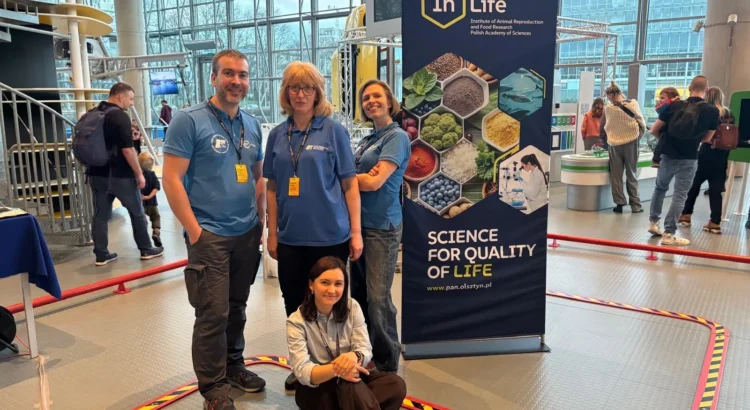
Naukowcy Instytutu wzięli udział w Śniadaniu Mistrzów, wydarzeniu inaugurującym wystawę „CLEVERFOOD for everyone” w Centrum Nauki Experyment w Gdyni, gdzie zaprezentowali m.in. oryginalne metody przetwarzania żywności i mikroorganizmy, dzięki którym powstają fermentowane produkty mleczne. To kolejne popularnonaukowe wydarzenie, na którym naukowcy Instytutu mogli dzielić się wiedzą i wynikami prowadzonych przez nich badań.
– Interaktywne stanowiska zachęcają do dialogu i refleksji nad wyzwaniami, które stawia przed nami współczesność: nadmierną eksploatacją zasobów, zmianą klimatu i niezdrowymi nawykami żywieniowymi społeczeństwa. Mówi o procesach związanych z uprawą, produkcją, przetwarzaniem żywności i wszelkich praktycznych aspektach związanych z jedzeniem. Podkreśla, jak ważna jest rola organizacji działających na rzecz bardziej sprawiedliwej dystrybucji jedzenia, zdrowszej produkcji w duchu zrównoważonego rozwoju – podsumowują organizatorzy z Centrum Nauki Experyment.
Wystawa została stworzona przez zespół ekspertów z Ecsite (Europejskiej Sieci Centrów Nauki i Muzeów).
Increased susceptibility to obesity in women contributes to their fertility problems, our scientists have shown. Their research focused on the molecular mechanisms responsible for the proper functioning of the female reproductive system. The results have just been published in the journal Molecular Metabolism.
– We know that obesity in women is associated with infertility, and this is due to disturbances at many levels. We are concerned with understanding these mechanisms at the molecular level, that is, inside the cells. In our work, we focus on ovarian dysfunction, which is not only a storehouse of egg cells, but also a site for the production of oestrogens – key fertility hormones – says Dr Karolina Wołodko from the Fertility and Development Programming Team.
OBESITY AND INFERTILITY
In order to look at the changes at the molecular level that occur in the reproductive system, particularly in ovarian cells, Dr Karolina Wołodko – together with a team led by Dr Antonio Galvao – conducted her observations on two strains of mice with different susceptibility to obesity. – We wanted to reflect the tendencies observed among people when some find it easier and others find it more difficult to gain weight – explains the researcher. Both groups were fed a high-calorie diet.
– We found that the group that gained weight sooner (i.e. the one prone to obesity) also showed abnormal ovarian processes associated with a decrease in hormone production. We also observed elevated blood levels of, among other things, leptin, which is characteristic of obesity and also greatly affects reproductive capacity. There were no such changes in the second group – says the biotechnologist.
The researchers then examined what changes occurred in the ovarian cells. – In the obesity-prone group, these changes were significant. One of the most important findings is the characterisation of changes in the cells of the ovarian follicle sheath, which led to a decrease in the production of the steroid hormone oestrogen, which is very important for the proper functioning of the entire reproductive system. Moreover, we have demonstrated the influence of factors hitherto unrelated to hormone production – explains Dr Karolina Wołodko.
Furthermore, based on the results from the obesity-resistant group, the researchers showed that eating a high-fat diet alone does not lead to changes at the level of the reproductive system, as suggested by some previous scientific studies. – The key here, however, is weight gain – the researcher emphasises.
URGENCY
– By understanding the underlying mechanisms and disorders that lead to infertility in obese women, it will be possible to address the problem in the future by developing new therapies. Of course, further basic research is needed, and then also those at the clinical level – says Dr Karolina Wolodko.
She adds that the scale of the problem is significant and still growing. – Already one in six couples trying to have a child is struggling with infertility. In parallel, the number of people who are overweight and obese is increasing, which also affects the functioning of the reproductive system – she points out. Furthermore, in her opinion, the topic of research into understanding the molecular mechanisms involved in the female reproductive system is still receiving insufficient attention in global science. – So far, most of the research around reproduction has focused on males and sperm, who are an easier model to study. Further, too little attention has been paid to the study of females and their reproductive system, which, however, is much more complex – concludes the scientist.
Zwiększona podatność na otyłość u kobiet przyczynia się do ich problemów z płodnością – wykazali naukowcy Instytutu. Ich badania skupiły się na molekularnych mechanizmach odpowiedzialnych za prawidłowe funkcjonowanie układu rozrodczego kobiet. Wyniki zostały właśnie opublikowane w czasopiśmie „Molecular Metabolism”.
– Wiemy, że otyłość u kobiet związana jest z niepłodnością, co wynika z zaburzeń na wielu poziomach. My zajmujemy się poznaniem tych mechanizmów na poziomie molekularnym, czyli we wnętrzu komórek. W naszej pracy skupiamy się na dysfunkcji jajników, które są nie tylko magazynem komórek jajowych, ale także miejscem produkcji estrogenów – kluczowych hormonów płodności – opowiada dr Karolina Wołodko z Zespołu Programowania Płodności i Rozwoju.
OTYŁOŚĆ A NIEPŁODNOŚĆ
Aby przyjrzeć się zmianom na poziomie molekularnym, jakie zachodzą w układzie rozrodczym, w szczególności w komórkach jajnika, dr Karolina Wołodko – wraz z zespołem pod kierownictwem dra hab. Antonia Galvao – swojego obserwacje prowadziła na dwóch szczepach myszy z różną podatnością na otyłość. – W ten sposób chcieliśmy odzwierciedlić tendencje obserwowane wśród ludzi, kiedy jedni łatwiej, a inni trudniej przybierają na wadze – podaje badaczka. Obie grupy były karmione wysokokaloryczną dietą.
– Okazało się, że grupa, która prędzej przybrała na wadze (czyli ta podatna na otyłość) wykazała również zaburzenia w procesach jajnikowych związane ze spadkiem produkcji hormonów. Zaobserwowaliśmy też podwyższony poziom we krwi m.in. leptyny, co jest charakterystyczne dla otyłości, a również bardzo wpływa na zdolności rozrodcze. W drugiej grupie takich zmian nie było – mówi biotechnolożka.
Następnie naukowcy zbadali, jakie zmiany zaszły w komórkach jajnika. – W grupie podatnej na otyłość te zmiany były znaczące. Jednym z najważniejszych odkryć jest scharakteryzowanie zmian w komórkach osłonki pęcherzyka jajnikowego, które doprowadziły do spadku produkcji hormonów steroidowych – estrogenów, bardzo ważnych dla prawidłowego funkcjonowania całego układu rozrodczego. Co więcej, wykazaliśmy wpływ czynników dotychczas niepowiązanych z produkcją hormonów – wyjaśnia dr Karolina Wołodko.
Ponadto, na podstawie wyników z grupy opornej na otyłość, badacze wykazali, że samo spożywanie diety wysokotłuszczowej nie prowadzi do zmian na poziomie układu rozrodczego, co sugerowały niektóre wcześniejsze badania naukowe. – Kluczowe jest tu jednak przybranie na wadze – podkreśla naukowczyni.
NAGLĄCA POTRZEBA
– Dzięki zrozumieniu podstawowych mechanizmów i zaburzeń, które prowadzą do niepłodności u otyłych kobiet, w przyszłości będzie można rozwiązywać ten problem, opracowując nowe terapie. Oczywiście konieczne są dalsze badania podstawowe, a później również te na poziomie klinicznym – mówi dr Karolina Wołodko.
Dodaje, że skala problemu jest duża i wciąż rośnie. – Już teraz jedna na sześć par starających się o dziecko zmaga się z problemem niepłodności. Równolegle rośnie liczba osób z nadwagą i otyłością, co ma wpływ również na funkcjonowanie układu rozrodczego – wskazuje.
Ponadto, w jej ocenie, w światowej nauce temat badań nad poznaniem molekularnych mechanizmów zachodzących w układzie rozrodczym kobiet wciąż nie jest dostatecznie zauważany. – Dotychczas większość badań wokół rozrodczości skupiała się na samcach i spermie, którzy są łatwiejszym modelem do badania. Dalej za mało uwagi poświęca się badaniom samic i ich układu rozrodczego, który jednak jest dużo bardziej skomplikowany – podsumowuje naukowczyni.
Konkurs na stypendystę w projekcie badawczym, finansowanym w ramach konkursu NCN OPUS 19, pt. „Ultra-czułe narzędzia do wykrywania antybiotyków jako nowa strategia kontroli leczenia i okresu karencji po antybiotykoterapii bydła” realizowanym pod kierunkiem dr Katarzyny Kurzątkowskiej-Adaszyńskiej w Zespole Biosensorów Instytutu Rozrodu Zwierząt i Badań Żywności Polskiej Akademii Nauk w Olsztynie wygrała pani Paulina Żółtowska.