Dr Marianna Raczyk z Zespołu Nutrigenomiki była gościem redaktor Izabeli Malewskiej w audycji „Nauka dla wszystkich” Radia Olsztyn, gdzie mówiła o żywności szczególnie korzystnej dla naszego zdrowia.
Wśród najbardziej korzystnych, a zarazem dostępnych regionalnie produktów naukowczyni wymienia m.in. jabłka.
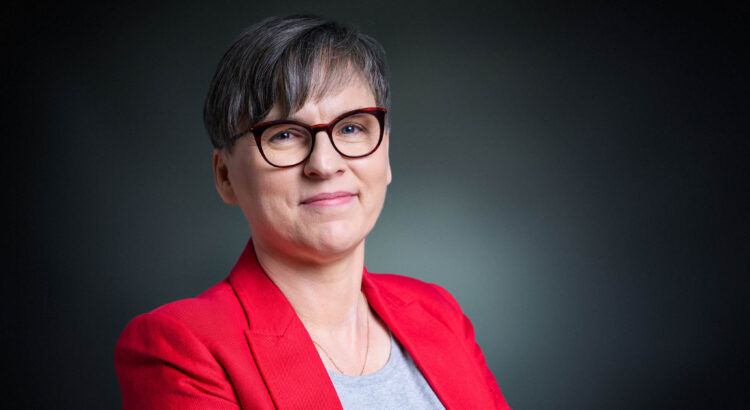
Prof. Bożena Kamińska from the Laboratory of Molecular Neurobiology, Nencki Institute of Experimental Biology Polish Academy of Sciences, will be the guest of the upcoming Open Seminar organized within the WELCOME2 ERA Chair project.
Seminar Title: Dissecting brain tumor microenvironment at a single-cell resolution reveals new targets and immune biomarkers Date & Time: 31 October, 10:00 AM Place: Institute of Animal Reproduction and Food Research PAS in Olsztyn, 18 Trylińskiego St., Conference Room “SKANDA”
We look forward to seeing you there!
Abstract of the presentation:
The tumor microenvironment (TME) plays important role in tumor endurance and response to therapies. TME of malignant brain tumors (gliomas) is characterized by a large diversity of different cell types, including endothelial cells, neurons, astrocytes, and a variety of immune cells such as microglia, tumor-associated macrophages, and tumor-infiltrating lymphocytes and various non-cellular components.
Advancements of single-cell and spatial transcriptomics provide powerful means to systemically profile the TME at a single-cell resolution, revealing the phenotypes and functionalities of disease-specific cell populations. Human tumors have different genetic alterations and consequences of those alterations on the immune TME and host immunity are poorly known. We used Cellular Indexing of Transcriptomes and Epitopes by Sequencing (CITE-seq) to identify cells/functionalities in experimental gliomas with various genetic alterations: the mutated NRAS or overexpression of PDGFB and different IDH1 status (wild type of mutated). IDH1 mutations are among the initial events in tumorigenesis and mutant IDH1 enzymes via the production of the oncometabolite 2-hydroxyglatarate (2-HG) exert pronounced effects on the immune composition of TME. Computational analysis revealed the presence of 34 immune cell clusters in tumors and various abundance of specific cells/states in TME of gliomas with distinct genetic alterations. IDH1 mutant gliomas have less cytotoxic T lymphocytes than wild type gliomas, and we noticed the inhibition of cell cycle processes in T cells suggesting deeper immunosuppression in those gliomas. The observed differences were validated by flow cytometry and immunocytochemistry. The experimental tumor models revealed mechanisms of immune dysregulation and defined new targets for immunotherapies. We found that tumor-secreted SPP1 (secreted phosphoprotein 1) a ligand of integrins drives reprogramming of immune cells, formation of aberrant tumor vasculature and a “cold” TME. We had developed synthetic peptides that block SPP1-integrin interactions and reprogramming of myeloid cells. The 7aaRGD peptide efficiently blocked microglia-dependent invasion of glioma cells in vitro, prevented the emergence of protumoral myeloid cells and normalized peritumoral vasculature. Combining 7aaRGD with anti-PD-1 antibody reduced tumor growth, expanded proliferating, interferon-ɣ producing CD8+T cells and reduced T regulatory cells. Transcriptomic profiles of myeloid cells after the combined treatment suggested the emergence of the “hot” inflammatory TME and augmented immune responses. Intratumorally delivered 7aaRGD similarly modified the TME of human U87MG gliomas in immunocompromised mice. We developed a series of humanized SPP1-integrin blocking peptides that reduced invasion of glioma cells in vitro. The leading candidate I49 blocked glioma growth in vivo when delivered intratumorally. We propose that combining the integrin blockade with immune checkpoint inhibitors would improve immunotherapy outcomes in brain tumors and other cancers.
About the speaker – prof. Bożena Kamińska
Prof. Bożena Kamińska is a distinguished neuroscientist and molecular biologist, internationally recognized for her research on brain tumors and immune responses in the central nervous system.
She is head of the Laboratory of Molecular Neurobiology at the Nencki Institute of Experimental Biology of the Polish Academy of Sciences in Warsaw, Poland. She obtained her PhD in biochemistry at the Nencki Institute in 1991 and after postdoctoral training at the Mc Gill University in Montreal, Canada, she become a full professor in 2003. From 2009 to 2023 she was the director of the Postgraduate School of Molecular Medicine at the Medical University of Warsaw. She was a visiting researcher at the Brain Research Institute at UCLA in Los Angeles, USA (2001-2002) and the Nanshan Scholar visiting professor at the Medical University of Guangzhou, China (2019-2022). She is an elected member of the Polish Academy of Sciences (since 2016) and European Molecular Biology Organization (since 2022).
She received a prestigious Foundation for Polish Science Award 2021 in life sciences, the Prime Minister Award for scientific achievements (2022) and was nominated by NCN for AcademiaNet – Expert Database for Outstanding Female Scientists and Scholars.
She specializes in molecular neurobiology, tumor immunology, neuro-oncology and neuroimmunology, with focus on functions of myeloid cells in pathological processes. Prof. Kaminska’s lab employs multidisciplinary approaches combining in vivo experiments in rodent models of human pathologies and in vitro experiments in primary cultures, brain slices and human induced pluripotent stem cell organoids. She has pioneered single-cell omics studies of brain tumor microenvironment in experimental gliomas. In recent years her group has been exploring transcriptional and epigenetic mechanisms in microglia in response to environmental exposures and experience.
She promoted 38 PhD students and 15 Master students.
Prof. Bożena Kamińska z Laboratorium Neurobiologii Molekularnej Instytutu Biologii Doświadczalnej Instytutu Nenckiego PAN będzie gościem nadchodzącego seminarium naukowego. Spotkanie będzie poświęcone badaniom nad mikrośrodowiskiem guzów mózgu i nowymi możliwościami terapii glejaków.
Profesor wygłosi wykład: Dissecting brain tumor microenvironment at a single-cell resolution reveals new targets and immune biomarkers.
Seminarium odbędzie się 31 października (piątek) o godz. 10:00 w sali konferencyjnej Instytutu Rozrodu Zwierząt i Badań Żywności PAN w Olsztynie przy ul. Trylińskiego 18 (sala SKANDA).
Wykład zostanie wygłoszony w języku angielskim.
Serdecznie zapraszamy!
Abstrakt wystąpienia:
The tumor microenvironment (TME) plays important role in tumor endurance and response to therapies. TME of malignant brain tumors (gliomas) is characterized by a large diversity of different cell types, including endothelial cells, neurons, astrocytes, and a variety of immune cells such as microglia, tumor-associated macrophages, and tumor-infiltrating lymphocytes and various non-cellular components.
Advancements of single-cell and spatial transcriptomics provide powerful means to systemically profile the TME at a single-cell resolution, revealing the phenotypes and functionalities of disease-specific cell populations. Human tumors have different genetic alterations and consequences of those alterations on the immune TME and host immunity are poorly known. We used Cellular Indexing of Transcriptomes and Epitopes by Sequencing (CITE-seq) to identify cells/functionalities in experimental gliomas with various genetic alterations: the mutated NRAS or overexpression of PDGFB and different IDH1 status (wild type of mutated). IDH1 mutations are among the initial events in tumorigenesis and mutant IDH1 enzymes via the production of the oncometabolite 2-hydroxyglatarate (2-HG) exert pronounced effects on the immune composition of TME. Computational analysis revealed the presence of 34 immune cell clusters in tumors and various abundance of specific cells/states in TME of gliomas with distinct genetic alterations. IDH1 mutant gliomas have less cytotoxic T lymphocytes than wild type gliomas, and we noticed the inhibition of cell cycle processes in T cells suggesting deeper immunosuppression in those gliomas. The observed differences were validated by flow cytometry and immunocytochemistry. The experimental tumor models revealed mechanisms of immune dysregulation and defined new targets for immunotherapies. We found that tumor-secreted SPP1 (secreted phosphoprotein 1) a ligand of integrins drives reprogramming of immune cells, formation of aberrant tumor vasculature and a “cold” TME. We had developed synthetic peptides that block SPP1-integrin interactions and reprogramming of myeloid cells. The 7aaRGD peptide efficiently blocked microglia-dependent invasion of glioma cells in vitro, prevented the emergence of protumoral myeloid cells and normalized peritumoral vasculature. Combining 7aaRGD with anti-PD-1 antibody reduced tumor growth, expanded proliferating, interferon-ɣ producing CD8+T cells and reduced T regulatory cells. Transcriptomic profiles of myeloid cells after the combined treatment suggested the emergence of the “hot” inflammatory TME and augmented immune responses. Intratumorally delivered 7aaRGD similarly modified the TME of human U87MG gliomas in immunocompromised mice. We developed a series of humanized SPP1-integrin blocking peptides that reduced invasion of glioma cells in vitro. The leading candidate I49 blocked glioma growth in vivo when delivered intratumorally. We propose that combining the integrin blockade with immune checkpoint inhibitors would improve immunotherapy outcomes in brain tumors and other cancers.
Prof. Bożena Kamińska is a distinguished neuroscientist and molecular biologist, internationally recognized for her research on brain tumors and immune responses in the central nervous system.
She is head of the Laboratory of Molecular Neurobiology at the Nencki Institute of Experimental Biology of the Polish Academy of Sciences in Warsaw, Poland. She obtained her PhD in biochemistry at the Nencki Institute in 1991 and after postdoctoral training at the Mc Gill University in Montreal, Canada, she become a full professor in 2003. From 2009 to 2023 she was the director of the Postgraduate School of Molecular Medicine at the Medical University of Warsaw. She was a visiting researcher at the Brain Research Institute at UCLA in Los Angeles, USA (2001-2002) and the Nanshan Scholar visiting professor at the Medical University of Guangzhou, China (2019-2022). She is an elected member of the Polish Academy of Sciences (since 2016) and European Molecular Biology Organization (since 2022).
She received a prestigious Foundation for Polish Science Award 2021 in life sciences, the Prime Minister Award for scientific achievements (2022) and was nominated by NCN for AcademiaNet – Expert Database for Outstanding Female Scientists and Scholars.
She specializes in molecular neurobiology, tumor immunology, neuro-oncology and neuroimmunology, with focus on functions of myeloid cells in pathological processes. Prof. Kaminska’s lab employs multidisciplinary approaches combining in vivo experiments in rodent models of human pathologies and in vitro experiments in primary cultures, brain slices and human induced pluripotent stem cell organoids. She has pioneered single-cell omics studies of brain tumor microenvironment in experimental gliomas. In recent years her group has been exploring transcriptional and epigenetic mechanisms in microglia in response to environmental exposures and experience.
She promoted 38 PhD students and 15 Master students.
Zarządzanie pracą laboratorium oraz badania z udziałem zwierząt – to tematy, o których dyskutowali eksperci z Polski, Portugalii, Holandii i Estonii, tworząc unikalną przestrzeń do wymiany cennych doświadczeń i dobrych praktyk. W dniach 23-24 września br. nasz Instytut pełnił rolę gospodarza międzynarodowych warsztatów zorganizowanych w ramach projektu CROSSPATHS, programu ukierunkowanego na rozwój międzynarodowej współpracy jednostek naukowych na rzecz lepszego wykorzystywania inwestycji finansowanych z Regionalnych Programów Operacyjnych i tworzenia innowacji w dziedzinie żywności, zdrowia i biogospodarki.
ZARZĄDZANIE LABORATORIUM: WYZWANIA
Pierwszego dnia uczestnicy skupili się na wyzwaniach stojących przed menedżerami laboratoriów. Po wizytach w naszych laboratoriach przedstawiciele Uniwersytetu Katolickiego w Portugalii (UCP), Estońskiego Uniwersytetu Nauk Przyrodniczych (EMU) oraz naszego Instytutu otworzyli dyskusję, w której starali się zidentyfikować kluczowe obszary problemowe, z którymi zmagają się kierownicy laboratoriów. Kluczowe wyzwania to ograniczone budżety, niedobór personelu i nadmierne eksploatowanie sprzętu. Jako strategie wychodzące naprzeciw w/w wyzwaniom wskazano m.in. wzmocnienie współpracy, lepsze zarządzanie danymi oraz definiowanie unikalnych cech oferty poszczególnych placówek. Dzień podsumowano wykładem Inny Dimovej (Innotrope), który przybliżył uczestnikom zawiłości praw własności intelektualnej w europejskich projektach badawczych.
PRZEDE WSZYSTKIM ETYKA
Drugi dzień poświęcono tematyce dobrostanu zwierząt. Nasi eksperci, prof. Jerzy Juśkiewicz, prowadzący badania z udziałem zwierząt, i dr hab. inż. Radosław Kowalski, Przewodniczący Krajowej Komisji Etycznej do Spraw Doświadczeń na Zwierzętach, omówili etyczne aspekty badań, alternatywne metody doświadczeń in vivo oraz polskie ramy prawne. Przedstawiciele Uniwersytetu w Wageningen (WUR) zaprezentowali z kolei innowacyjne projekty w zakresie zrównoważonego rolnictwa. Podsumowaniem drugiego dnia była wizyta studyjna w zwierzętarni Instytutu.
SZANSE I ZASADA 3R
Wspólnie zidentyfikowane wyzwania laboratoryjne wymagają wspólnych rozwiązań, opartych na standaryzacji, szkoleniach i partnerskiej współpracy między instytucjami. Warsztaty utwierdziły uczestników w konieczności kontynuacji ścisłej współpracy i dzielenia się wiedzą, szczególnie w ramach projektów europejskich. Dyskusja o badaniach na zwierzętach podkreśliła zaś kluczowe znaczenie transparentności, etyki i stosowania zasady 3R (ang. Replacement, Reduction, Refinement – Zastąp, Zmniejsz, Udoskonal) dla uzyskania wiarygodnych wyników naukowych i społecznej akceptacji.
Laboratory management and animal testing were the topics discussed by experts from Poland, Portugal, the Netherlands, and Estonia, creating a unique space for the exchange of valuable experiences and good practices. On September 23-24, our Institute hosted an international workshop organized as part of the CROSSPATHS project, which is a program focused on developing international cooperation between scientific units to make better use of investments financed by Regional Operational Programs and to create innovations in the fields of food, health, and bioeconomy.
LAB MANAGEMENT: CHALLENGES
On the first day, participants focused on the challenges facing laboratory managers. After visiting our laboratories, representatives from the Catholic University of Portugal (UCP), the Estonian University of Life Sciences (EMU), and our Institute opened a discussion in which they sought to identify key problem areas faced by laboratory managers. The key challenges include limited budgets, staff shortages, and overuse of equipment. Strategies to address these challenges included strengthening cooperation, improving data management, and defining the unique characteristics of each institution’s offerings. The day concluded with a lecture by Inna Dimova (Innotrope), who introduced participants to the complexities of intellectual property rights in European research projects.
ABOVE ALL, ETHICS
The second day was dedicated to animal welfare. Our experts, Prof. Jerzy Juśkiewicz, who conducts research involving animal testing, and Dr. Radosław Kowalski, Chairman of the Polish National Ethics Committee for Animal Experiments, discussed the ethical aspects of research, alternative methods of in vivo experiments, and the Polish legal framework. Representatives of Wageningen University (WUR) presented innovative projects in the field of sustainable agriculture. The second day was concluded with a study visit to the Institute’s animal facility.
THE 3R PRINCIPLE
The jointly identified laboratory challenges require joint solutions, based on standardization, training, and partnership between institutions. The workshop confirmed the need for participants to continue close cooperation and knowledge sharing, especially within European projects. The discussion on animal testing highlighted the key importance of transparency, ethics, and the application of the 3Rs principle (Replacement, Reduction, Refinement) for obtaining reliable scientific results and social acceptance.
„Antyczni farmerzy”, fauna w kształcie flory, niezwykłe wodne organizmy: KORALOWCE – przedmiot badań dr. hab. inż. Radosława Kowalskiego, lidera Zespołu Biotechnologii Rozrodu Organizmów Wodnych naszego Instytutu – były bohaterem podkastu „Nauka dla wszystkich” @Radio Olsztyn.
W rozmowie z redaktor Izabelą Malewską badacz opowiada o naukowych strategiach wzmocnienia raf koralowych – np. krzyżowaniu gatunków, kriokonserwacji – i ochronie tych wyjątkowych ekosystemów przed negatywnymi skutkami globalnego ocieplenia.
W najnowszym 32. numerze czasopisma „PANorama”, wydawanego przez Oddział PAN w Olsztynie i w Białymstoku z siedzibą w Olsztynie, ukazał się artykuł dr. hab. Bartosza Fotschki pt. „Mikrobiota jelitowa i polifenole z malin – duet, który wspiera procesy metaboliczne w wątrobie”. To podsumowanie wyróżnienia badacza przez Kapitułę Nagrody Naukowej Oddziału PAN. Więcej o wyróżnionych badaniach pisaliśmy tutaj.
Dr Fotschki opisuje w artykule, jak synergiczne działanie ekstraktu z malin i prebiotyków może skutecznie przeciwdziałać niealkoholowemu stłuszczeniu wątroby oraz wspierać regulację metabolizmu lipidów. Przeprowadzone eksperymenty pokazały także, że kluczowym ogniwem tego mechanizmu jest aktywność mikrobioty jelitowej, bez której bioaktywne składniki nie wykazują pełni swojego potencjału.
Developed jointly by Stanford University and Elsevier, the list includes the top 2% of scientists worldwide based on standard citation metrics. This prestigious list recognizes the world’s leading scientists who have had a significant impact on their fields through their research and publications. Publications are an essential source of evidence-based information. They allow scientific excellence to be assessed and the latest scientific achievements to be tracked, which is particularly important in times of increasing misinformation.
prof. Carsten Carlberg Main Field: Biomedical Research Sub Field: Biochemistry & Molecular Biology Rank in the SubField: 154.0 H-index: 14, Hm-index: 10
prof. dr hab. Ryszard Amarowicz Main Field: Agriculture, Fisheries & Forestry Sub Field: Food Science Rank in the SubField: 97.0 H-index: 21, Hm-index: 9
dr Małgorzata Starowicz Main Field: Agriculture, Fisheries & Forestry Sub Field: Food Science Rank in the SubField: 586.0 H-index: 13, Hm-index: 6
prof. dr hab. Henryk Zieliński Main Field: Agriculture, Fisheries & Forestry Sub Field: Food Science Rank in the SubField: 1288.0 H-index: 12, Hm-index: 6
prof. dr hab. Andrzej Ciereszko Main Field: Agriculture, Fisheries & Forestry Sub Field: Fisheries Rank in the SubField: 861.0 H-index: 7, Hm-index: 4
prof. Carsten Carlberg Main Field: Biomedical Research Sub Field: Biochemistry & Molecular Biology Rank in the SubField: 454.0 H-index: 67, Hm-index: 42 Top 2% Listed Year(s): 2025, 2024, 2023, 2022, 2021, 2020
prof. dr hab. Ryszard Amarowicz Main Field: Agriculture, Fisheries & Forestry Sub Field: Food Science Rank in the SubField: 85.0 H-index: 67, Hm-index: 32 Top 2% Listed Year(s): 2025, 2024, 2023, 2022, 2021, 2020
prof. dr hab. Henryk Zieliński Main Field: Agriculture, Fisheries & Forestry Sub Field: Food Science Rank in the SubField: 626.0 H-index: 40, Hm-index: 19 Top 2% Listed Year(s): 2025, 2024, 2023, 2022, 2021, 2020
prof. dr hab. Mariusz Piskuła Main Field: Agriculture, Fisheries & Forestry Sub Field: Food Science Rank in the SubField: 963.0 H-index: 40, Hm-index: 15 Top 2% Listed Year(s): 2025, 2023, 2022, 2021
prof. dr hab. Adam Zięcik, professor emeritus Main Field: Clinical Medicine Sub Field: Dairy & Animal Science Rank in the SubField: 558.0 H-index: 32, Hm-index: 17 Top 2% Listed Year(s): 2025, 2024, 2023, 2022, 2021, 2020
dr hab. inż. Magdalena Karamać Main Field: Agriculture, Fisheries & Forestry Sub Field: Food Science Rank in the SubField: 1307.0 H-index: 30, Hm-index: 14 Top 2% Listed Year(s): 2025, 2024, 2023
prof. dr hab. Andrzej Ciereszko Main Field: Agriculture, Fisheries & Forestry Sub Field: Fisheries Rank in the SubField: 811.0 H-index: 40, Hm-index: 22 Top 2% Listed Year(s): 2025, 2024
prof. dr hab. Zenon Zduńczyk, professor emeritus Main Field: Agriculture, Fisheries & Forestry Sub Field: Dairy & Animal Science Rank in the SubField: 900.0 H-index: 36, Hm-index: 19 Top 2% Listed Year(s): 2025, 2022, 2021
prof. dr hab. Jan Kotwica, professor emeritus Main Field: Agriculture, Fisheries & Forestry Sub Field: Dairy & Animal Science Rank in the SubField: 871.0 H-index: 29, Hm-index: 18 Top 2% Listed Year(s): 2025, 2022
Congratulations!
More information about the list of leading minds in science and the methodology used in the ranking can be found here.
Opracowana wspólnie przez Uniwersytet Stanforda i wydawnictwo naukowe Elsevier lista zawiera 2% najlepszych naukowców na świecie według standardowych wskaźników cytowań. Prestiżowa lista wyróżnia czołowych naukowców świata, którzy swoją pracą naukową i publikacjami wywarli znaczący wpływ na swoje dziedziny. Publikacje są niezbędnym źródłem informacji potwierdzonej w nauce. Pozwalają ocenić doskonałość naukową oraz śledzić najnowsze osiągnięcia naukowe, co ma szczególne znaczenie w czasach rosnącej dezinformacji.
Na liście oceniającej cytowania za rok 2025 znaleźli się:
Organization and supervision of the proper functioning of the histology laboratory;
Maintenance and operation of laboratory equipment and coordination of service and maintenance work;
Implementation of modern research techniques and methods in line with the laboratory’s business profile;
Providing technical and substantive support to researchers in planning and implementing research;
Maintaining records of reagents, consumables and fixed assets;
Preparing and updating laboratory documentation and preparing periodic reports;
Developing procurement plans and ordering materials necessary for the ongoing operation of the laboratory;
Organization and management of chemical and biological waste generated in the laboratory.
Requirements:
Higher education (biological sciences or related);
Practical knowledge of basic histological techniques (e.g. preparation of histological preparations, staining and labeling of histological preparations);
Good knowledge of MS Office;
English – at least B2 level;
Highly developed interpersonal skills;
Very good work organization;
Independence and meticulousness in carrying out assigned tasks;
Ability to work in a team;
Knowledge of microscopic techniques and/or basic work in an in vitro culture laboratory will be an additional advantage.
Welcome:
Experience in laboratory work;
Knowledge of the principles of good laboratory practice.
We offer:
Remuneration depends on experience and skills;
Improving qualifications, including participation in training on techniques used in the histology laboratory and good laboratory practice;
A stable working environment in a leading research center;
Benefits from the Company Social Benefits Fund;
Access to an English learning platform for an employee and family member.
Application documents required from candidates:
CV;
cover letter;
references (if the candidate has any).
Competition entries should be sent to the following email address: m.cieslik@pan.olsztyn.pl. In the subject line of the message, please enter: „Competition for the position of technologist/specialist at LAK”
or to the following address:
Institute of Animal Reproduction and Food Research of the Polish Academy of Sciences, Human Resources Development Section, Trylińskiego 18, 10-683 Olsztyn
With the note „Competition for the position of technologist/specialist at LAK”.
The deadline for submitting documents is October 24, 2025.
After initial analysis of the submitted applications, we will contact selected candidates to conduct further stages of the recruitment process.
Please include in your CV a clause consenting to the processing of your personal data by us during the recruitment process:
„I consent to the processing of my personal data contained in the application documents by the Institute of Animal Reproduction and Food Research of the Polish Academy of Sciences in Olsztyn with its registered office 10-683 Olsztyn, ul. Trylińskiego 18, in order to carry out the recruitment process and publish the full competition results on the Institute’s website.
Information clause:
Providing the data contained in the recruitment documents is not obligatory, but it is a necessary condition for participating in the recruitment process.
The administrator of personal data processed as part of the recruitment process is the Institute of Animal Reproduction and Food Research of the Polish Academy of Sciences in Olsztyn with its registered office at 10-683 Olsztyn, ul. Trylińskiego 18, tel. 89 500 32 00, e-mail: institute@pan.olsztyn.pl.
Contact with the personal data protection officer is possible at: iodo@pan.olsztyn.pl.
The provided personal data will be processed for the purpose of implementing the current recruitment process and stored until its completion based on the consent given (in accordance with Article 6(1)(a) of the GDPR).
The data subject has the right to withdraw consent at any time without affecting the lawfulness of processing based on consent before its withdrawal.
The data subject has the right to access his or her personal data, request its rectification or deletion. Submitting a request to delete data is tantamount to resigning from participation in the recruitment process. In addition, she has the right to request restriction of processing in the cases specified in Art. 18 GDPR.
The data subject has the right to lodge a complaint with the President of the Personal Data Protection Office regarding unlawful processing of his or her personal data. This body will be competent to consider the complaint, however, the right to lodge a complaint only concerns the lawfulness of the processing of personal data and does not concern the recruitment process.
The data provided will not be subject to profiling or made available to entities or third countries. The recipients of the data may be institutions authorized by law.